


Morning tea
A warm cup to ease into the day.


Smooth peach. A real tea base. Your everyday cup, hot or cold.
50 servings at ₹11.98 per serve
*Contains naturally occurring sugars (0.076 g per serving).
Free delivery and cash on delivery available where serviceable. 7-day returns available on eligible orders.
A little room for tea
Smooth peach flavour. A familiar tea break, wherever you find it.
A warm cup to ease into the day.

Step away from the screen. Make time for tea.
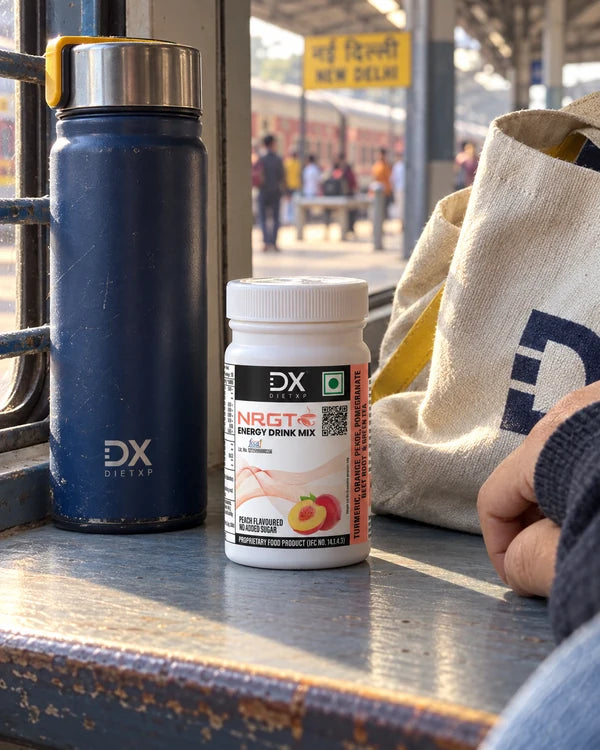
A small jar for the journeys ahead.
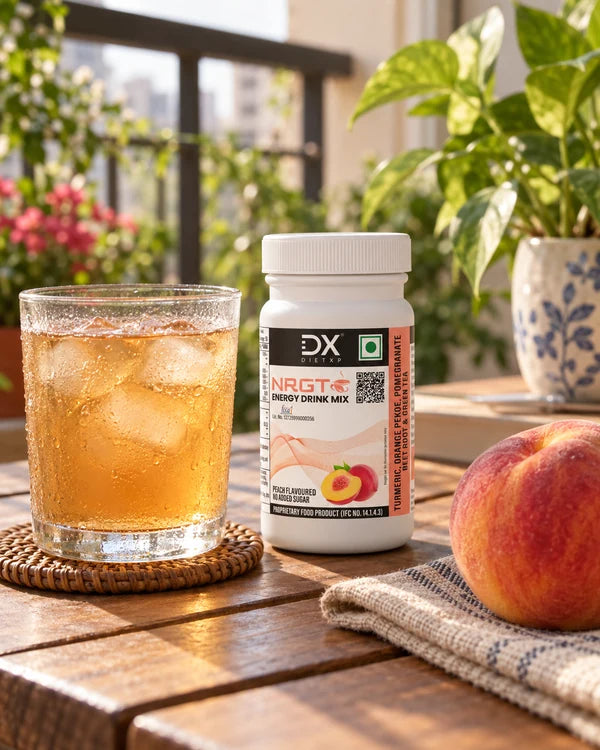
Serve it cold and enjoy a change of scene.
From the NRGT range
These videos feature NRGT Masala Tea. Peach has its own flavour and ingredient amounts. Tap a video for sound.
Masala Tea flavour shown.
Masala Tea flavour shown.
Masala Tea flavour shown.
Masala Tea flavour shown.
Masala Tea flavour shown.
Masala Tea flavour shown.
Masala Tea flavour shown.
Masala Tea flavour shown.
Your cup. Your way.
A small scoop. A brisk tea base.
Make a little room for peach.
0 g added sugar.
Contains naturally occurring sugars.

Measure approximately 1 g of NRGT Peach.
Hot or cold. Stir for about 10 seconds, until dissolved.
Enjoy your cup. Keep the jar tightly closed in a cool, dry place.
Do not consume more than 500 ml of prepared drink per day. Each serving contains 40 mg caffeine. Suitability & intake advice →
Inside every scoop
A tea base, measured caffeine and familiar botanicals. Explore what each ingredient does in the formula, what research has studied and where the evidence stops.
Amounts below follow the label. Percentages refer to the dry mix; milligram amounts are per 1 g serving.
Ingredients shown for illustration; proportions are not to scale.
 Orange PekoeThe black tea base.8%
Ingredient 01 / 07
8%

Tea leaves and buds used in leaf grading. Orange Pekoe is a tea grade, not an orange flavour; NRGT uses an extract.
Photo: Arne Hückelheim · CC BY-SA 3.0 · cropped/resizedOrange Pekoe gives the drink its black tea body, amber colour and brisk tea character beneath the peach flavour. Orange Pekoe describes a tea grade; it does not mean orange fruit flavour. The label declares 8% Orange Pekoe in the powder.
Black and green tea both come from Camellia sinensis. Processing changes their polyphenol profile: black tea contains theaflavins and thearubigins formed during oxidation. Hodgson and Croft’s review discusses tea flavonoids and cardiovascular research. It is useful background on the ingredient, but includes different types of tea and different study designs.
Einöther and Martens reviewed studies of tea consumption, attention and mood. Hindmarch and colleagues compared tea, coffee and water across a day, examining alertness and sleep. These studies concern particular beverages and caffeine exposures. They do not establish the effect of the Orange Pekoe quantity in one scoop of NRGT.
Orange Pekoe provides the darker tea layer alongside Green Tea. The label’s 8% is the ingredient proportion, not a declaration of theaflavin, thearubigin or polyphenol content. The separately declared caffeine amount for the finished drink is 40 mg per serving.
The ingredient documentation summary covers tea identity and quality checks. A raw-material certificate describes the tested ingredient; it does not establish a health benefit or the amount of every tea compound in the finished drink.
View ingredient documentation summary ↗Close & return to ingredients ↑ Green TeaA lighter tea layer.4%
Ingredient 02 / 07
4%

Camellia sinensis leaves. NRGT contains green tea extract, rather than whole leaves.
Photo: たね · CC BY-SA 3.0 · cropped/resizedGreen Tea adds a lighter tea note alongside the Orange Pekoe base. The label declares 4% Green Tea. Its catechins, including epigallocatechin gallate (EGCG), are widely studied tea compounds; the label does not declare a separate EGCG or L-theanine amount.
Baba and colleagues studied a specified green tea catechin intervention in middle-aged and older adults. That research asks a question about that formulation and population, rather than about any drink that contains green tea.
Venables and colleagues investigated green tea extract, fat oxidation and glucose tolerance in healthy humans. Hursel and colleagues pooled studies of catechin-rich teas and caffeine. Zamani and colleagues reviewed cardiovascular risk factors. The interventions, doses and outcomes vary across this literature; a change in a short-term laboratory measurement is not evidence that NRGT causes weight loss or treats a health condition.
Sohail and colleagues reviewed caffeine and L-theanine research. Although L-theanine occurs naturally in tea, NRGT does not declare its amount. Research on specified L-theanine–caffeine combinations cannot be used to describe this product as a proven combination or to promise a jitter-free response.
The published ingredient summary identifies EGCG as a Green Tea marker and describes available quality checks. It is documentation of ingredient quality, not a clinical efficacy report for this drink.
View ingredient documentation summary ↗Close & return to ingredients ↑ CaffeineA declared amount in every serving.40 mg
Ingredient 03 / 07
40 mg per serving

A close view of caffeine crystals, shown for identification. This is not a sample from an NRGT batch.
Photo: TimausE · CC BY-SA 4.0 · cropped/resizedThe nutrition panel declares 40 mg caffeine per 1 g serving. The ingredient list identifies caffeine from Coffea arabica. This is the caffeine amount to count when you prepare the drink as directed; do not add another estimated caffeine allowance for the tea ingredients.
Caffeine is a stimulant. It can increase alertness, while sensitivity and the way the body processes it differ between people. The FDA’s consumer guidance explains that excessive caffeine can cause problems including sleep disruption, anxiety and a faster heart rate.
Tea, coffee, cola, energy drinks and some medicines or supplements can all contribute caffeine. A measured amount on a label helps you keep track, but does not guarantee a particular response or mean that more servings are better.
Check the finished-product label below and the Peach batch certificate. General caffeine guidance is not a clinical study of NRGT and does not replace its intake directions.
View the complete product label ↓Close & return to ingredients ↑ Vitamin CAscorbic acid, clearly declared.40 mg
Ingredient 04 / 07
40 mg per serving

Ascorbic acid, the vitamin C ingredient declared on the Peach label. An illustrative ingredient photograph.
Photo: Chemicalinterest · Public domain · cropped/resizedNRGT Peach provides 40 mg vitamin C per serving. It appears as ascorbic acid in the ingredient declaration. The amount is shown separately from the tea extracts and botanicals so you can compare it with your overall diet.
Vitamin C is a water-soluble nutrient needed for collagen formation and normal immune function. It also acts as an antioxidant and helps the body absorb iron from plant foods. The NIH Office of Dietary Supplements explains these established nutrient functions.
A nutrient’s normal function does not mean a particular drink prevents infections, treats fatigue or replaces a balanced diet. Studies of high-dose vitamin C, supplements or intravenous treatment use different amounts and routes from a food serving.
The nutrition panel and Peach finished-product batch certificate are the relevant product documents. No separate vitamin C ingredient certificate is linked here.
View the complete product label ↓Close & return to ingredients ↑ TurmericA small botanical spice layer.30 mg
Ingredient 05 / 07
30 mg per serving

A turmeric rhizome and powder. The photograph shows the botanical, not a measured NRGT serving.
Photo: Simon A. Eugster · CC BY-SA 3.0 · cropped/resizedTurmeric (Curcuma longa) adds a familiar botanical spice note alongside the tea and fruit ingredients. The label declares 30 mg turmeric per serving. That is the ingredient name and amount used here, rather than describing the drink as a curcumin supplement.
Turmeric naturally contains curcuminoids, including curcumin. These are not the same thing as the total turmeric ingredient. Hewlings and Kalman review human curcumin research and discuss how formulation and absorption influence study results.
Naghsh and colleagues’ umbrella review of inflammatory biomarkers included curcumin interventions of 300–1,900 mg, over several weeks. Those amounts refer to the studied curcumin preparations. They cannot be treated as equivalent to 30 mg of the turmeric ingredient declared in NRGT.
NCCIH describes initial findings from turmeric or curcumin studies in knee osteoarthritis as promising but says better evidence is needed. Products in this research vary in composition and bioavailability. This is background about investigated ingredients, not a claim that NRGT relieves pain or supports joint function.
Curcumin research has also examined exercise-related muscle damage, soreness and inflammatory markers. Studies of concentrated supplements and specialised delivery systems cannot establish a recovery or performance benefit for 30 mg of the turmeric ingredient in NRGT. Measuring a biomarker is different from demonstrating a meaningful benefit for the person drinking this product.
The ingredient documentation summary describes curcuminoid-marker and quality checks where available. Ingredient specifications and certificates are distinct from a finished-product assay and from a clinical trial.
View ingredient documentation summary ↗Close & return to ingredients ↑ PomegranateThe fruit-botanical layer.25 mg
Ingredient 06 / 07
25 mg per serving

The pomegranate fruit. NRGT contains the declared pomegranate ingredient, rather than fresh fruit or juice.
Photo: Ivar Leidus · CC BY-SA 4.0 · cropped/resizedPomegranate (Punica granatum) adds a fruit-botanical layer to the tea formula. The ingredient declaration lists 2.5%, equivalent to 25 mg in a 1 g serving. This is a modest inclusion, not a serving of pomegranate juice or a high-dose extract supplement.
Pomegranate is studied for compounds such as punicalagins and ellagic acid, alongside other polyphenols. Zarfeshany and colleagues review this background. The presence of an ingredient does not establish the amount of each compound in NRGT or a health outcome from one serving.
Trexler and colleagues and Roelofs and colleagues studied specified pomegranate extract interventions in exercise settings. Their work considered measures such as blood flow and exercise performance. Those interventions are different from the 25 mg pomegranate inclusion in NRGT; they do not establish a performance or circulation claim for this drink.
Siddarth and colleagues studied daily pomegranate juice over 12 months in middle-aged and older adults. Other papers studied juice in coronary heart disease or carotid stenosis, or pooled blood-pressure studies. Juice volume, extract composition, population and duration all differ. Findings from these settings should not be transferred to a tea drink.
The published ingredient summary identifies ellagic acid as a marker used in available pomegranate quality documentation. A raw-material certificate does not establish the finished drink’s polyphenol dose or clinical efficacy.
View ingredient documentation summary ↗Close & return to ingredients ↑ Beet rootA botanical particular to Peach.40 mg
Ingredient 07 / 07
40 mg per serving

Slices of real beetroot. NRGT Peach declares 40 mg of beet root per serving; the photograph is not a batch sample or a measured serving.
Photo: Rawpixel Ltd · CC BY 2.0 · cropped/resizedThe Peach label declares beet root at 4% of the powder, equivalent to 40 mg in a 1 g serving. It is one of the botanicals in this flavour. The label does not declare a nitrate or betalain amount, so the weight of beet root should not be read as a nitrate dose.
Beetroot research covers different preparations, including whole beetroot, juices and extracts. These preparations differ in their nitrate and plant-compound content. Clifford and colleagues review the nitrate pathway and betalain pigments alongside laboratory and human research. This provides background on the botanical; it does not establish the effects of this drink.
Siervo and colleagues pooled 16 short trials involving 254 participants. Inorganic nitrate or beetroot juice was associated with a reduction in systolic blood pressure, while the pooled diastolic result was not statistically significant. Interventions lasted from hours to 15 days, and the authors called for longer studies. Those preparations and nitrate amounts cannot be assumed to match 40 mg of beet root in NRGT.
Gao and colleagues reviewed 73 studies involving 1,061 participants. Dietary nitrate improved some outcomes, including power output and time to exhaustion, but not time-trial performance or perceived exertion. Study methods and reporting varied. These findings concern nitrate supplementation, rather than a claim that every food containing beet root improves exercise performance.
The NIH Office of Dietary Supplements describes studies using measured amounts of beetroot juice or nitrate, with results varying by the protocol and participants. A declared botanical weight is a different measurement from its nitrate content. NRGT Peach does not state a nitrate dose, and no product-specific exercise or blood-pressure trial is presented here.
The original Peach packaging supports the declared 4% / 40 mg amount. The finished-product certificate is a separate document; check its product, batch and tested parameters. No beet-root-specific ingredient certificate is presented in this chapter.
View the complete product label ↓Close & return to ingredients ↑ MaltodextrinThe powder’s carrier.Supporting ingredient
Supporting ingredient
Supporting ingredient

Maltodextrin powder, the carrier ingredient in the dry mix. This reference photograph is not an NRGT batch sample.
Photo: Awkwafaba · CC BY-SA 4.0 · cropped/resizedMaltodextrin is a carbohydrate used as a carrier in the dry mix. It helps distribute small ingredient amounts through the powder. Its individual quantity is not declared. The finished product contains 0.82 g carbohydrate and 3.28 kcal per 1 g serving. Zero added sugar does not mean carbohydrate-free.
View complete ingredient declaration ↓Close & return to ingredients ↑ Peach flavouringThe smooth peach taste.Supporting ingredient
Supporting ingredient
Supporting ingredient

Peach illustrates the flavour. The label declares nature-identical flavouring, not fresh peach juice.
Photo: Prianxi · CC BY-SA 4.0 · cropped/resizedThe label lists Nature Identical Flavouring Substance. It provides the peach flavour profile; the drink is not described as peach juice. The individual flavouring amount and its exact derivation are not declared on the pack.
View complete ingredient declaration ↓Close & return to ingredients ↑ Acidity regulatorCitric acid for flavour balance.INS 330
Supporting ingredient
INS 330

Citric acid crystals photographed through a polarising microscope. INS 330 is the acidity regulator on the label.
Photo: Patchy · Public domain · cropped/resizedINS 330 identifies citric acid, used here as an acidity regulator. It helps balance the flavour of the prepared drink. Its individual quantity is not declared, and its formulation role is not a separate health claim.
View complete ingredient declaration ↓Close & return to ingredients ↑The complete formula
What goes in. What is declared. What has been checked.
Choose a card to take a closer look.
 01On the labelNutrition & ingredientsThe complete declaration, with values per serving and per 100 g.Open the label
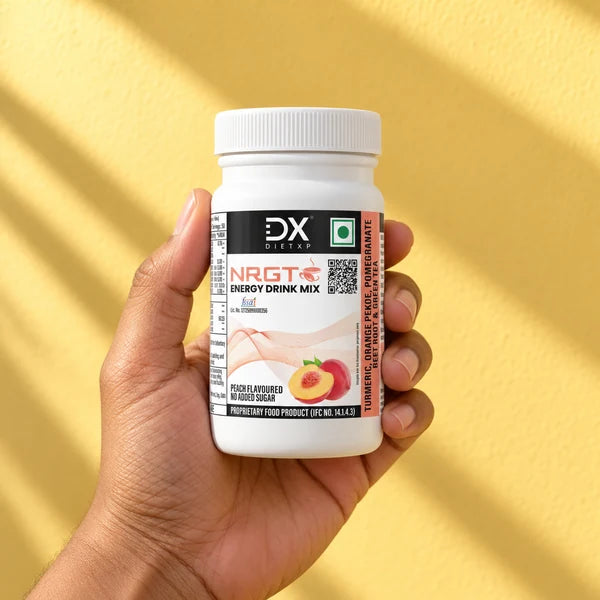 02Original packagingSee every side.Read the nutrition, preparation and manufacturer panels.View the packaging
 03Finished productYour batch. Its report.Match the batch number on your jar to the Peach certificate.Check the certificate
 04Ingredient documentationIngredient quality checksExplore the scope of available ingredient checks and documents.Explore the summary
 05All published documentsFind your certificate.Browse by product and batch. Choose the report for Peach.Visit the certificate hub
Nutrition values are approximate. One serving is 1 g, prepared with 160 ml water.
| Nutrient / ingredient | Per 1 g | Per 100 g |
|---|---|---|
| Energy | 3.28 kcal | 328 kcal |
| Carbohydrates | 0.82 g | 82.00 g |
| Total Sugars | 0.076 g | 7.60 g |
| Added Sugars | 0.00 g | 0.00 g |
| Total Fat | 0.005 g | 0.50 g |
| Saturated Fat | 0.00 g | 0.00 g |
| Trans Fat | 0.00 g | 0.00 g |
| Protein | 0.00 g | 0.00 g |
| Sodium | 0.77 mg | 77 mg |
| Caffeine | 40 mg | 4000 mg |
| Orange Pekoe | 8% | Not declared |
| Green Tea | 4% | Not declared |
| Pomegranate | 25 mg | 2500 mg |
| Vitamin C | 40 mg | 4000 mg |
| Turmeric | 30 mg | 3000 mg |
| Beet Root | 40 mg | 4000 mg |
| Peach Flavouring | Not declared | Not declared |
| Acidity Regulator | INS 330 | Not declared |
Maltodextrin, Nature Identical Flavouring Substance, Orange Pekoe (8%), Ascorbic Acid, Green Tea (4%), Beet Root (4%), Caffeine (Coffea arabica), Turmeric, Pomegranate (2.5%) and Acidity Regulator (INS 330).
Manufactured in a facility that also processes wheat, soy, oats and nuts. The pack carries a vegetarian mark; it does not carry vegan certification.
Open any panel to read it at full size.
Ingredient research and quality documents have different scopes. Neither establishes the clinical efficacy of the finished NRGT formula.
Why we made it
We made NRGT Peach for the tea breaks that fit around your day. A tea base, a bright peach flavour and a small jar that travels from your kitchen shelf to your work bag.
Explore the ingredientsHot or cold. One small scoop.
Make a little room for tea.
A little more clarity
Preparation, caffeine, ingredients and everyday care.
Ask us a questionNRGT Peach is a refreshing peach-flavoured beverage mix from DietXP. Each 1 g serving contains 40 mg caffeine and includes Orange Pekoe, green tea, pomegranate, turmeric, beet root, and vitamin C. It has 0 g added sugar and is made to mix with hot or cold water.
The full ingredient list as declared on the label is:
No added sugar, no sucralose, no aspartame. Manufactured in a facility that also processes Wheat, Soy, Oats, and Nuts.
The caffeine in NRGT Peach is declared on the label as caffeine from Coffea arabica. Each 1 g serving provides 40 mg caffeine, delivered in a measured amount per serving.
NRGT Peach combines a tea base and peach flavour with 40 mg caffeine per serving, vitamin C, turmeric, beet root and pomegranate. It has 0 g added sugar and can be prepared with hot or cold water. Compare the complete ingredient declaration and serving amounts when choosing a drink.
No. NRGT Peach contains 0 g added sugar per serving as declared on the label. It does not use sucralose or aspartame. The label also notes that the product contains naturally occurring sugars.
The pack lists Zeon Lifesciences Ltd., FSSAI licence 10013062000225, as manufacturer, and NUTRISPACE, FSSAI licence 12725999000356, as marketer. You can view the original packaging in the science section. A licence is not evidence of a clinical effect.
Add one level scoop, approximately 1 g, to 160 ml of hot or cold water. Stir for about 10 seconds until dissolved. Do not consume more than 500 ml of prepared drink per day.
Yes. NRGT Peach is designed for both hot and cold water. Cold water gives it a light peach refresher feel; warm water makes it closer to a peach tea-style drink.
Most people use it in the morning or early afternoon. Because it contains caffeine, avoid taking it late in the day if caffeine affects your sleep.
The label states: do not consume more than 500 ml of prepared NRGT per day. At the standard preparation of 1 g per 160 ml, this is approximately three servings. Also account for caffeine from tea, coffee, soft drinks, and other sources.
Each serving of NRGT Peach contains 40 mg caffeine. Individual tolerance varies, so start with one serving and see how your body responds.
NRGT Peach is not recommended for children, pregnant or lactating women, or persons sensitive to caffeine. If you have a medical condition or are on medication, speak to your doctor before use.
No. NRGT Peach is not recommended during pregnancy or while breastfeeding because it contains caffeine. Please speak to your doctor for individual guidance.
No. NRGT Peach contains 40 mg caffeine per serving and is not suitable for people who are sensitive to caffeine.
NRGT Peach has 0 g added sugar, but contains maltodextrin and 0.82 g carbohydrate per serving. Zero added sugar does not mean carbohydrate-free or suitable for everyone. If you have diabetes, discuss it with your doctor or treating nutrition professional.
NRGT Peach does not carry an official vegan certification. It contains a nature-identical flavouring substance whose exact derivation is not declared on the label. If vegan suitability is important to you, check the full label or contact support@dietxp.com before use.
The label states the product is manufactured in a facility that also processes Wheat, Soy, Oats, and Nuts. Cross-contamination cannot be ruled out, so it may not be suitable for people with coeliac disease or severe gluten intolerance.
Store the container with the lid tightly closed in a cool, dry place away from sunlight. Keep out of reach of children. The label recommends consuming the product within 30 days once opened.
The Use By date is printed on the packaging. Use the product before this date and keep the canister sealed between servings.
NRGT is a caffeinated food product, not a medicine. Not recommended for children, pregnant or lactating women, or persons sensitive to caffeine.
Your next tea break
One small scoop. A smooth peach cup.
Keep your next tea break close.

DietXP NRGT Peach
Peach flavour · 50 servings per jar
50 servings · ₹11.98 per serving
Reviews
Most of these reviews come from our pre-launch tasting in April and May 2026, when people tried samples of NRGT Peach before it went on sale on 24 May. Every review is shown word for word.
We don't publish reviews that make health or medical claims, name or compare other brands, or describe the product differently from its label.
The peach flavour is not heavy or overly sweet. It is a light fruity note that does not linger weirdly after you finish the glass. Caffeine kicks in without any jitter. Been doing the cold version every morning before my walk for three weeks and I genuinely look forward to it now.
TasteI am a masala tea person and tried peach expecting to miss it. Peach is completely different but has its own appeal. Lighter, more summer-appropriate, more refreshing when it is hot. I keep both in the house now and alternate depending on the weather. Both have a place.
TasteMy wife commented on the smell before I had even made the drink. Said the whole kitchen smelled fruity. The drink fully delivers on that. Warm version has a softer peach note, cold version is crisper and more intense. Both versions are genuinely enjoyable and I have not found the taste wearing out.
TasteThe peach flavour with cold water and a couple of ice cubes is exactly the kind of afternoon drink I was looking for. Not too sweet, not plain, something that satisfies without making me feel heavy. The aroma alone makes you want to have it. Good product for people who want something light.
TasteFirst cup I thought the peach was a bit mild. By day three I realised that mildness is actually the point. It is not trying to be a juice, it is a tea-based drink with a fruit note. Once you adjust your expectation the flavour makes complete sense and you appreciate how clean it is.
TasteTexture is completely clean. Dissolves quickly, no grainy residue at the bottom. The peach flavour is consistent from first sip to last. No chemical aftertaste which is my biggest problem with most energy drinks. Been using it for six weeks and it still tastes the same as day one.
TasteCold NRGT peach with breakfast has become the thing I look forward to in the morning. The flavour is light enough to go with food, not overwhelming the way coffee can be. The energy is clean and steady. Five weeks into the habit and I cannot imagine summer mornings without this.
TasteTaste mein ek halka sa fruity note hai jo refreshing lagta hai. Green tea ka base feel hota hai peechhe. Masale ki koi zaroorat nahi summer mein yeh perfectly work karta hai. Smell toh itni achi hai ki ghar mein sab ne poochha kya bana rahe ho. Good product overall.
TasteSome energy drinks you have to choke down because the taste is so medicinal. NRGT peach is the opposite. It is smooth, the flavour is pleasant, and you find yourself finishing the glass quickly. That ease of consumption is why I have managed to stay consistent with it.
TasteFlavour is pleasant but I personally wanted the peach to be bolder. At 160ml it is on the lighter side. Tried with 130ml water and the flavour was better for my preference. The smell is definitely stronger than the taste when made at the recommended ratio. Still a good product overall.
TasteI was sceptical about beet root being in a peach flavoured drink. Thought it would taste earthy or off. It does not. The beet root is present at 40mg per serving and you cannot taste it at all. The peach flavour is clean and the beet root just sits quietly doing whatever it does in the background.
IngredientsThe cold coffee from my office canteen costs Rs 30 and gives me nothing except caffeine and sugar. NRGT peach per cup works out to under Rs 10 and has pomegranate, turmeric, beet root, and vitamin C along with the caffeine. The value comparison made me feel slightly foolish for not finding this earlier.
ValueStarted with warm water because I was comparing to the masala version. Switched to cold on a particularly warm day and the peach came to life completely. Crisper, more intense fruit note, lighter mouthfeel. Cold NRGT peach is now my go-to hot weather drink and I make it before anything else in the morning.
Hot or ColdMade it with chilled water and let it sit for two minutes before drinking. The peach flavour is more pronounced cold. Tastes almost like a light iced tea with fruit. Goes perfectly with breakfast. The smell coming from the cold glass is also noticeably stronger. Try the cold version if you have not yet.
Hot or ColdThe same powder behaves quite differently at different temperatures. Warm brings out the tea character, cold brings out the peach. Both are valid ways to have it. I do cold on regular days and warm when I need something comforting or the weather is cooler. Good product for all seasons.
Hot or ColdTrain trips are easier now. Scoop in a thermos, add warm water at the station, close it. Two to three hours later it still has that light peach warmth. The smell when you open the thermos after a few hours is actually better than freshly made somehow. Travelled with it twice and both times it was great.
Hot or ColdAdded a thin lemon slice to cold NRGT peach one morning as an experiment. The slight citrus lift made the whole drink feel sharper. Still mostly peach but with more brightness. Not everyone will want to modify it but if you like citrus notes this is a simple way to enhance it.
Hot or ColdOne scoop in cold water before my morning walk. The 40mg caffeine gets me moving without the heart racing I get from coffee. The peach taste is light enough to drink quickly without sitting down. Five weeks of consistent morning walks since starting this and I genuinely credit the routine.
Walking RoutineNot sure if it is the caffeine or just having a ritual but my walks have gone from 25 minutes to 40 minutes on average since I started having NRGT peach before heading out. The energy is clean and steady. No sudden crash mid-walk which used to happen when I had coffee before.
Walking RoutineCoffee before a walk gives me mild stomach issues. NRGT peach has no such problem. Completely light, no discomfort, and the caffeine still works for the energy needed to get moving at 6 am. The peach smell in the morning is a small but real pleasure that makes the routine easier.
Walking RoutineWe make two cups every morning before going out. Easy routine, takes two minutes, and we both notice the difference in how the walk starts versus days we skip it. The peach is his favourite flavour too so no complaints about the choice. The fact that it has turmeric and pomegranate in it is a bonus we both appreciate.
Walking RoutineI used to have peach juice or mango drinks and knew the sugar was a problem. Switched to NRGT peach. The fruit flavour satisfies that fruity drink craving completely and zero added sugar means no guilt. The pomegranate and turmeric in the background make it feel like a responsible choice too.
Sugar ReductionEverything in the office pantry is either too sweet, too cold by the time I get back, or has ingredients I cannot pronounce. My own NRGT peach in a glass beats all of it. The peach smell actually lifts the mood at the desk. Five people have asked what I am having.
Office UseCustomer reviews will appear here after approval.
Use the review form below to share your experience.
THE DIETXP COMMUNITY
Real experiences from the DietXP community.
Reviewed before publication. Your email stays private. Pre-launch tasting reviews are labelled separately.
Your honest feedback helps others know what to expect.
Try another rating to see more experiences.
YOUR PERSPECTIVE
Your words stay yours. Reviews appear after approval.
| Product | SKU | Description | Collection | Availability | Product type | Other details |
|---|


